1000Wh vs 2000Wh Power Station: FOSSiBOT F1800 or F2400, Which Is Worth Buying?
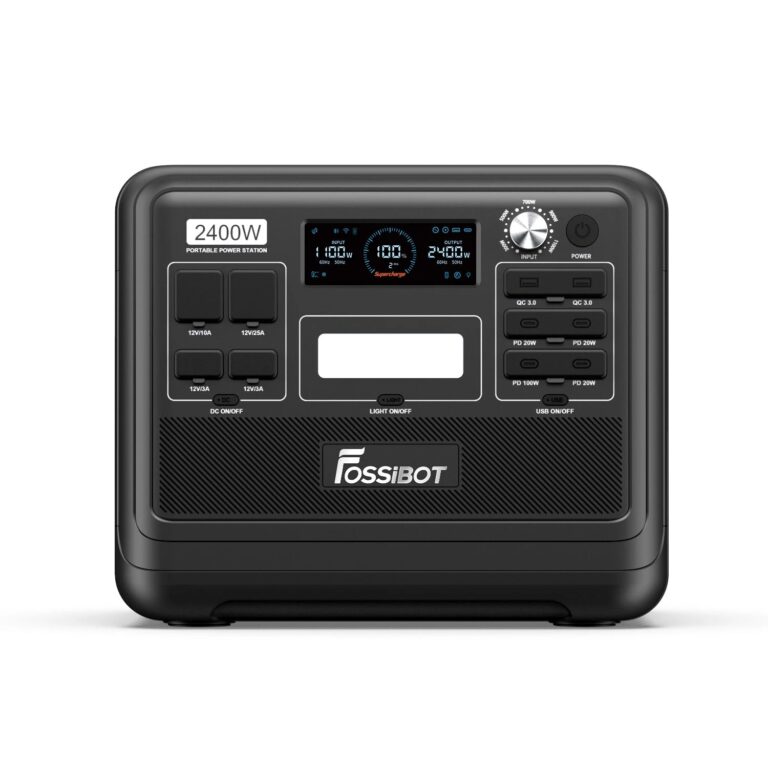
Choosing between a 1000Wh vs 2000Wh power station is mostly a question of what you need to run, and for how long. FOSSiBOT sells one of each in Europe: the F1800 (1,024Wh) at €459 and the F2400 (2,048Wh) at €759. Here is how to decide without overbuying.
Disclosure: BuyOrBypass may earn a commission if you buy through our links, at no extra cost to you.
F1800 vs F2400 at a glance
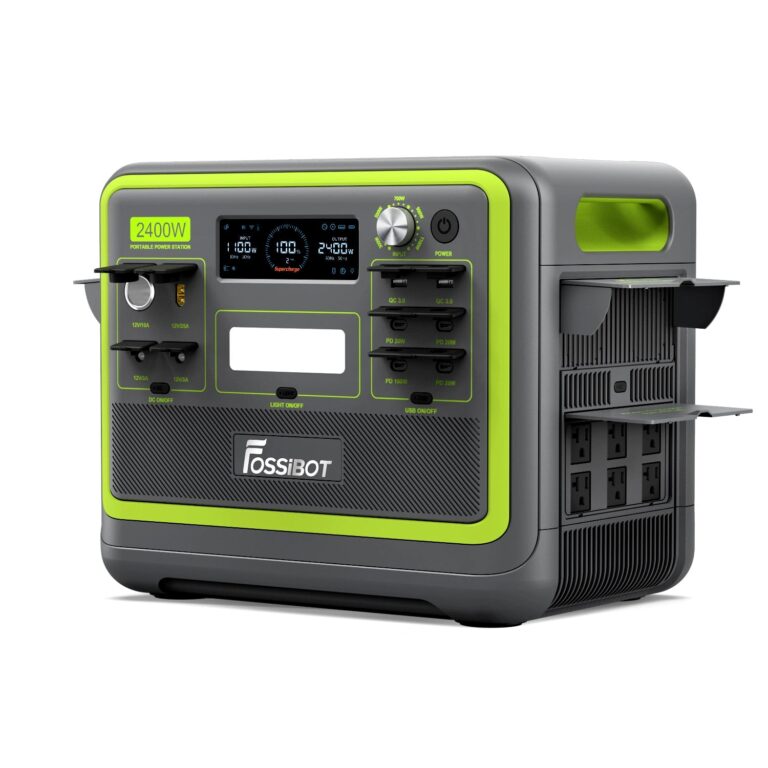
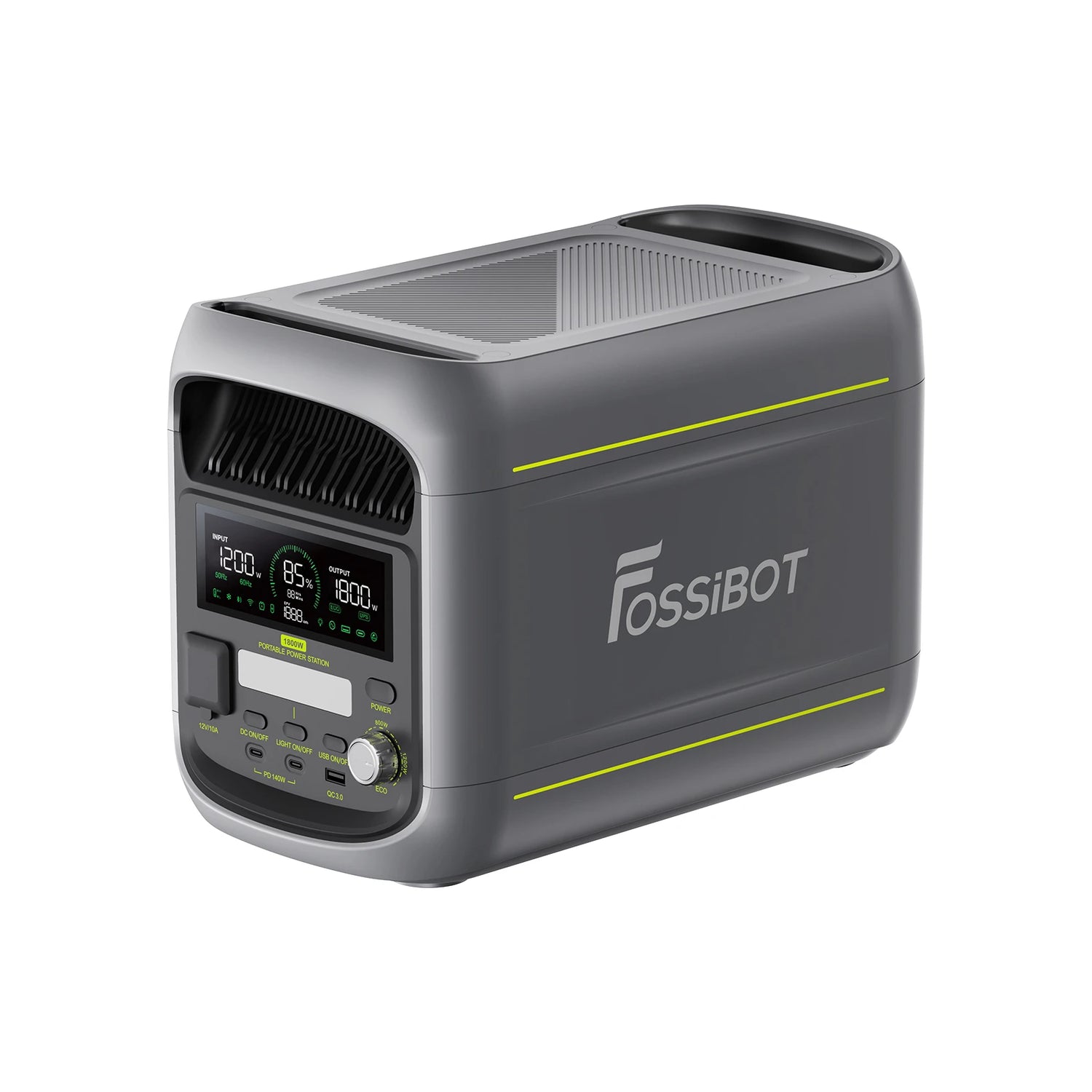
| F1800 | F2400 | |
|---|---|---|
| Capacity | 1,024Wh LiFePO4 | 2,048Wh LiFePO4 |
| Continuous / surge output | 1,800W / 3,600W | 2,400W / 4,800W |
| AC sockets (EU) | 2 | 3 |
| Wall charging | 1,200W, about 68 min | 1,100W, about 2 h |
| Solar input | 500W max | 500W max |
| Weight | 11.25 kg | 22 kg |
| Extra capacity | External 12/24/48V battery via DC (max 15A) | Not expandable |
| Listed noise | About 30 dB under 200W | Fans audible under heavy load (reviewers) |
| Price (EU store) | €459 | €759 |
| Price per rated Wh | about €0.45 | about €0.37 |
How long each one actually runs
In any 1000Wh vs 2000Wh power station comparison, runtime is what matters most. FOSSiBOT’s own rule of thumb is that about 85% of rated capacity reaches your devices. That gives roughly 870Wh usable from the F1800 and about 1,740Wh from the F2400. Independent testing of the F2400 measured 1,512 to 1,807Wh, so the estimate is realistic.
- Fridge averaging 60W: about 11 to 12 hours on the F1800, about 20 hours on the F2400.
- 500W load (microwave on low, power tools): about 1.7 hours vs about 3.3 hours.
- 1,000W load (kettle, heater): under 1 hour vs about 1.7 hours.
These are estimates from the manufacturer’s formula; real runtime drops in cold weather and with appliances that cycle on and off.
Which capacity do you need: 1000Wh vs 2000Wh power station
Choose the F1800 if your outages are short (a few hours), your biggest appliance stays under 1,800W, you will carry it often, or you want to cycle it daily with solar. Its 11.25 kg weight, quiet running, 68-minute wall charge and ECO mode make it the better everyday unit. You can check the F1800 price here.
Choose the F2400 if you need to keep a fridge running overnight and through the next day, run appliances between 1,800 and 2,400W, or power a van or cabin for a weekend. It is twice as heavy and cannot be expanded, but it costs less per watt-hour. See our full FOSSiBOT F2400 review or check the F2400 price here.
A third option: FOSSiBOT’s F3000 offers the same 2,048Wh as the F2400 with 3,000W output, and is listed only €40 higher. If you are leaning towards 2kWh, compare it too.
What to check before buying
Use this quick checklist before settling the 1000Wh vs 2000Wh power station question:
- Add up the watts of everything you want to run at the same time, and check the startup surge of motors and compressors.
- Estimate the hours you need, then multiply by your average load. Compare that with roughly 870Wh or 1,740Wh of real output.
- Consider where it will live. A 22 kg unit is fine in one place but tiring to move often.
- If you plan to grow your system, note that only the F1800 can take extra external batteries (cable not included).
Bottom line
For most people weighing a 1000Wh vs 2000Wh power station, the honest answer is to size for your longest realistic outage. If that is an evening, the F1800 is lighter, cheaper and quieter. If it is a full day with a fridge running, the F2400’s double capacity is worth the extra weight.
Sources: FOSSiBOT EU official product pages (specs and prices at time of research); independent F2400 capacity test by techtest.org.